
Best for
Mild to moderate crowding, spacing, shifting, relapse after previous orthodontic treatment, and patients who want a discreet alignment option.
Invisalign in Charlotte
Invisalign clear aligners can help straighten teeth without the look and feel of traditional brackets and wires. At Barrero Dental Boutique, aligner treatment begins with a careful evaluation of your teeth, bite, goals, and lifestyle so the recommendation fits more than just your smile - it fits the way you live.
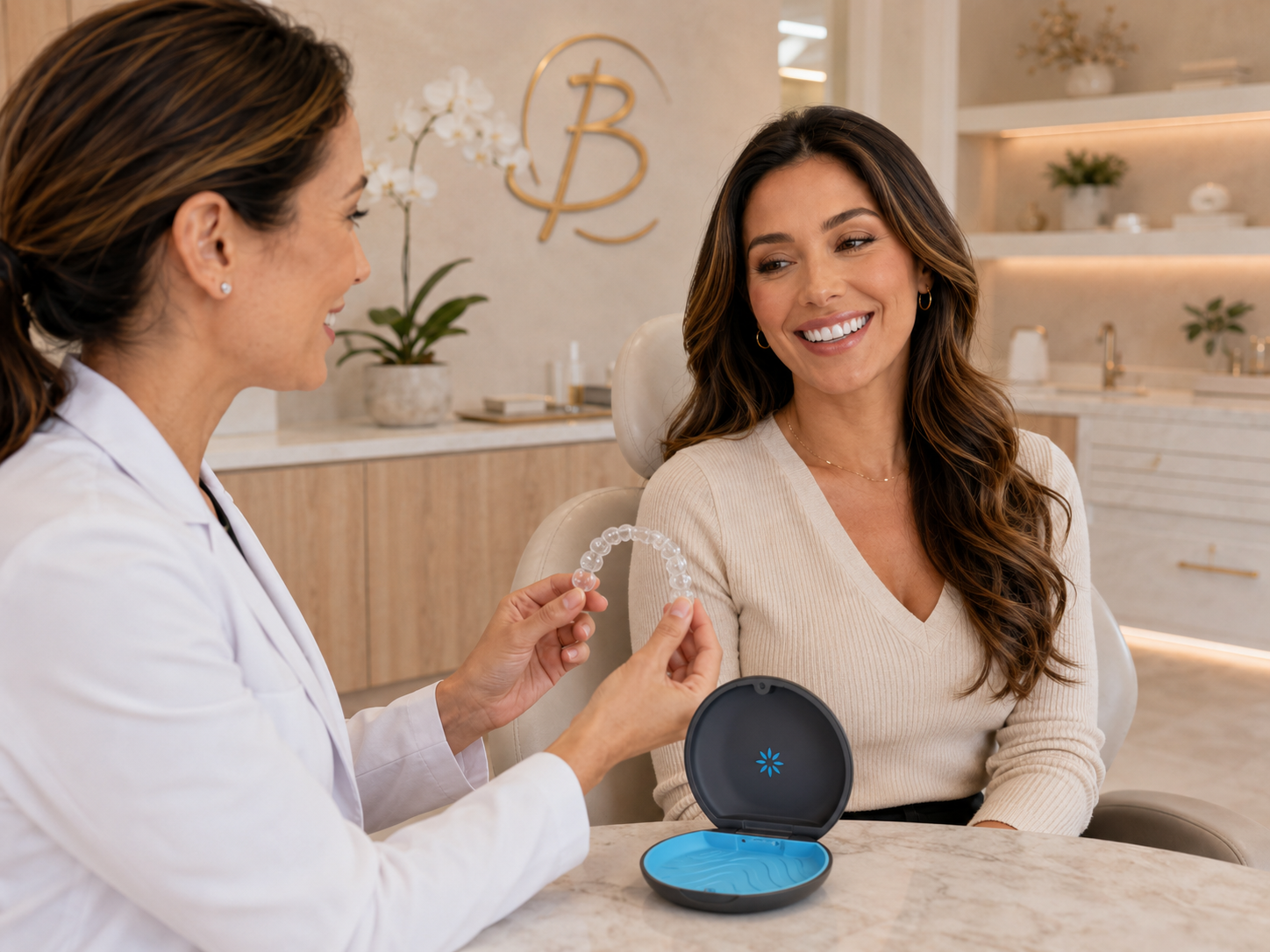
Quick scan
For patients who want the essentials first, Invisalign uses a series of custom clear aligners to gradually move teeth according to a planned sequence.
Mild to moderate crowding, spacing, shifting, relapse after previous orthodontic treatment, and patients who want a discreet alignment option.
Patients wear a series of removable clear aligners that are changed on a planned schedule as teeth gradually move.
Aligners generally need to be worn most of the day and removed for meals, brushing, and flossing. The exact instructions depend on the treatment plan.
Clear expectations, thoughtful case selection, digital planning when appropriate, and guidance that balances appearance, bite, oral health, and long-term stability.
Invisalign may be worth exploring if you want a straighter smile but prefer a more discreet and removable option than traditional braces.
The best way to know whether Invisalign is appropriate is through an evaluation. BDB can help determine whether clear aligners fit your goals, bite, gum health, and timeline.
Invisalign treatment uses a planned series of aligners to guide tooth movement over time. Each step is designed around your current smile, desired outcome, and clinical needs.
Your aligners are made to fit your teeth and apply gentle, planned pressure as treatment progresses.
Each aligner is part of a larger sequence designed to move teeth gradually toward the planned position.
Aligners are removed when eating and drinking anything other than water, then placed back after brushing or rinsing as directed.
Periodic visits help the team monitor progress, answer questions, and adjust the plan if needed.
Clear aligners are simple in concept, but successful treatment depends on planning, consistency, and case selection.
Invisalign aligners are made from clear material and designed to fit closely over the teeth. They are removable, which allows patients to eat, brush, and floss without brackets or wires. Because the aligners only work when worn as directed, patient consistency is an important part of treatment success.
Treatment begins with an evaluation of tooth position, bite, gum health, spacing, crowding, and smile goals. A series of aligners is then planned to move teeth gradually. Some patients may need small tooth-colored attachments, elastics, or refinements during treatment depending on the case.
Aligners are typically worn most of the day and removed for meals, brushing, and flossing. Patients should follow the wear schedule provided by the dentist, because inconsistent wear can slow progress or affect the final result.
During treatment, periodic check-ins allow the team to monitor tooth movement, confirm aligner fit, and make adjustments if needed. The timing of these visits varies by case and treatment plan.
Both Invisalign and traditional braces can move teeth. The right choice depends on the complexity of the case, lifestyle preferences, oral hygiene habits, and clinical goals.
BDB presents Invisalign as one possible option, not the automatic answer. The team will explain whether clear aligners are appropriate or whether a different treatment path would be more predictable.
What to expect
Invisalign treatment starts with understanding your goals and making sure clear aligners are clinically appropriate.
The team listens to what you want to improve, whether that is crowding, spacing, shifting, or alignment before cosmetic treatment.
Your dentist evaluates your teeth, gums, bite, previous dental work, and overall oral health. Imaging, photos, or digital scans may be used when appropriate.
If Invisalign is a good fit, the team reviews the expected approach, estimated timeline, wear expectations, and any attachments or refinements that may be needed.
You will wear each set of aligners according to the plan and return for progress checks so the team can monitor movement.
After active treatment, retainers are typically needed to help maintain the new tooth position. The team will explain how to protect the result over time.
Invisalign is designed to fit into daily routines, but treatment still requires consistency.
Remove aligners for meals and for drinks other than water unless directed otherwise. Clean your teeth or rinse before placing aligners back in.
Because aligners are removable, patients can brush and floss without working around brackets and wires.
Some patients notice a temporary change in speech or a slight lisp at first. This often improves as the mouth adjusts to the aligners.
Aligners may feel snug when a new set is started. Mild pressure can be a normal part of tooth movement, but persistent discomfort should be discussed with the team.
Keep aligners and their case with you. Consistent wear matters, especially when schedules are busy.
After treatment, retainers help preserve the new alignment. Skipping retainers can allow teeth to shift again.
Questions
Invisalign uses a series of custom clear aligners to gradually move teeth according to a planned sequence. Each aligner is worn as directed before moving to the next set.
Many Invisalign plans require aligners to be worn most of the day and removed only for meals, brushing, and flossing. Your dentist will give specific wear instructions for your treatment plan.
Aligners are removed for eating. After meals, you should brush or rinse as directed before putting the aligners back in to help keep both your teeth and aligners clean.
Some patients notice a temporary lisp or speech change when they first start wearing aligners. This usually improves as the mouth adjusts.
Treatment time varies depending on the complexity of the case, how much movement is needed, and how consistently the aligners are worn. BDB can provide a more specific estimate after evaluation.
Not always. Invisalign can be a great option for many mild to moderate cases, but traditional braces or specialist orthodontic care may be more appropriate for complex tooth movement or bite concerns.
Some patients need small tooth-colored attachments to help aligners grip and move teeth more predictably. The team will explain whether attachments are part of your plan.
Patients may feel pressure or soreness when starting a new aligner set. This is often part of the movement process. Persistent or sharp discomfort should be discussed with the team.
Yes, retainers are typically recommended after clear aligner treatment to help maintain the new tooth position.
Cost depends on the complexity of treatment, the number of aligners, treatment length, records, refinements, and retention needs. BDB can review fees after evaluating your case.
Some dental insurance plans include orthodontic benefits that may apply to Invisalign. Coverage varies by policy, so patients should review their plan or ask the office for help understanding available benefits.
Next step
Whether your teeth have shifted, you want a more discreet alignment option, or you are planning cosmetic treatment and want the foundation evaluated first, Barrero Dental Boutique can help you understand your options clearly.